
The cheapest leak test in plumbing costs nothing and takes ten minutes. Turn off every fixture and water-using appliance in the house, then go and look at the water meter. If the meter is still moving, water is going somewhere it should not. That single check tells you whether you have a leak at all, before anyone opens a wall or quotes for equipment. Most hidden leaks are found because somebody ran that test rather than because something dramatic happened.
How to run the meter test properly
- Turn off every tap, shower, washing machine, dishwasher and irrigation zone. If you have an automatic irrigation controller, put it in off rather than trusting the schedule.
- Do not flush a toilet or draw water for the duration of the test.
- Find the meter — usually in a box near the street or the property line — and lift the lid.
- Note the reading, including the small leak-indicator dial or triangle if the meter has one. That indicator spins on very low flow.
- Wait an hour or two without using water. Read it again.
Movement with everything off means water is being used somewhere. No movement means the supply side is sound and the problem lies elsewhere.
The most common culprit is a toilet
Before assuming a slab or wall leak, check the toilets. A flapper that no longer seats passes water continuously from the tank into the bowl and down the drain, silently and around the clock.
Put a few drops of food colouring in the tank and do not flush. If colour appears in the bowl within fifteen minutes, that toilet is leaking. It is one of the cheapest repairs in plumbing and one of the most common causes of an unexplained bill.
Signs of a leak you cannot see
- A bill that jumps with no change in how the household uses water
- A warm patch on a slab floor, which points at the hot line
- Musty smell in a cabinet, closet or wall cavity
- Staining or bubbling paint on a ceiling below a bathroom
- Pressure that has quietly dropped across the house
- The sound of running water with everything off
- An unusually green or soft patch of yard in dry months, which points at irrigation or the service line
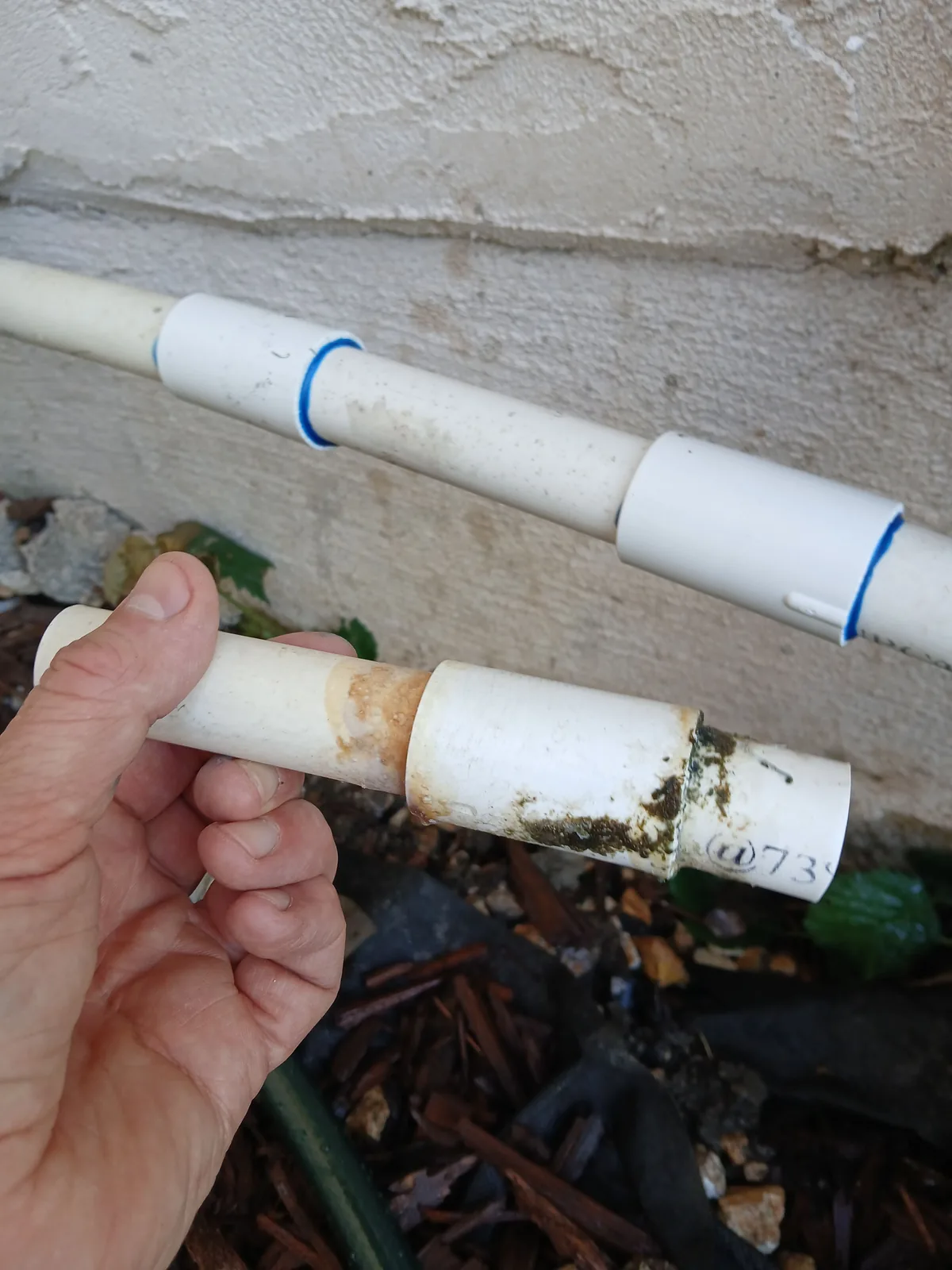
That last one matters here. Buried irrigation faults are among the most common leaks we find, and they are invisible because they are outdoors. Anti-siphon valves installed below grade instead of above are a recurring culprit — they leak into the soil, and the first sign is soggy ground and a bill that does not add up.
How the leak gets located without demolition
The point of leak detection is to open one place in the right spot rather than several in the wrong ones.
- Meter testing confirms a leak exists at all
- Isolating sections — closing valves to individual runs — narrows which line it is on
- Pressure testing confirms whether a suspect section holds
- Acoustic listening equipment picks up the sound of escaping water through slab and wall
- Thermal imaging finds temperature differences from a hot-water leak behind a surface
Each step narrows the area before anything is cut.
What to do while you wait
If water is actively running and you cannot find a fixture responsible, close the main shut-off. That is also the moment many people discover their main shut-off is seized — a corroded gate valve that will no longer close. If yours will not turn, mention it; replacing a failed shut-off is a small job that saves a very bad hour later.
Related reading
Frequently asked questions
How much water can a hidden leak waste? Enough to show clearly on a bill, which is usually how people notice. A continuously running toilet alone is one of the largest single wasters in a house.
Does homeowner insurance cover a hidden leak? Policies commonly distinguish sudden damage from gradual damage, and the pipe itself is often excluded even where resulting damage is covered. Check your specific policy — coverage varies enough that a general answer would mislead.
Can I find a slab leak myself? You can establish that one exists with the meter test and narrow it by feel if it is on the hot side. Pinpointing it without opening the floor needs acoustic or thermal equipment.
My meter has no leak indicator dial. What then? Take a careful reading, avoid all water use for two hours, and read it again. Any change at all is movement.