
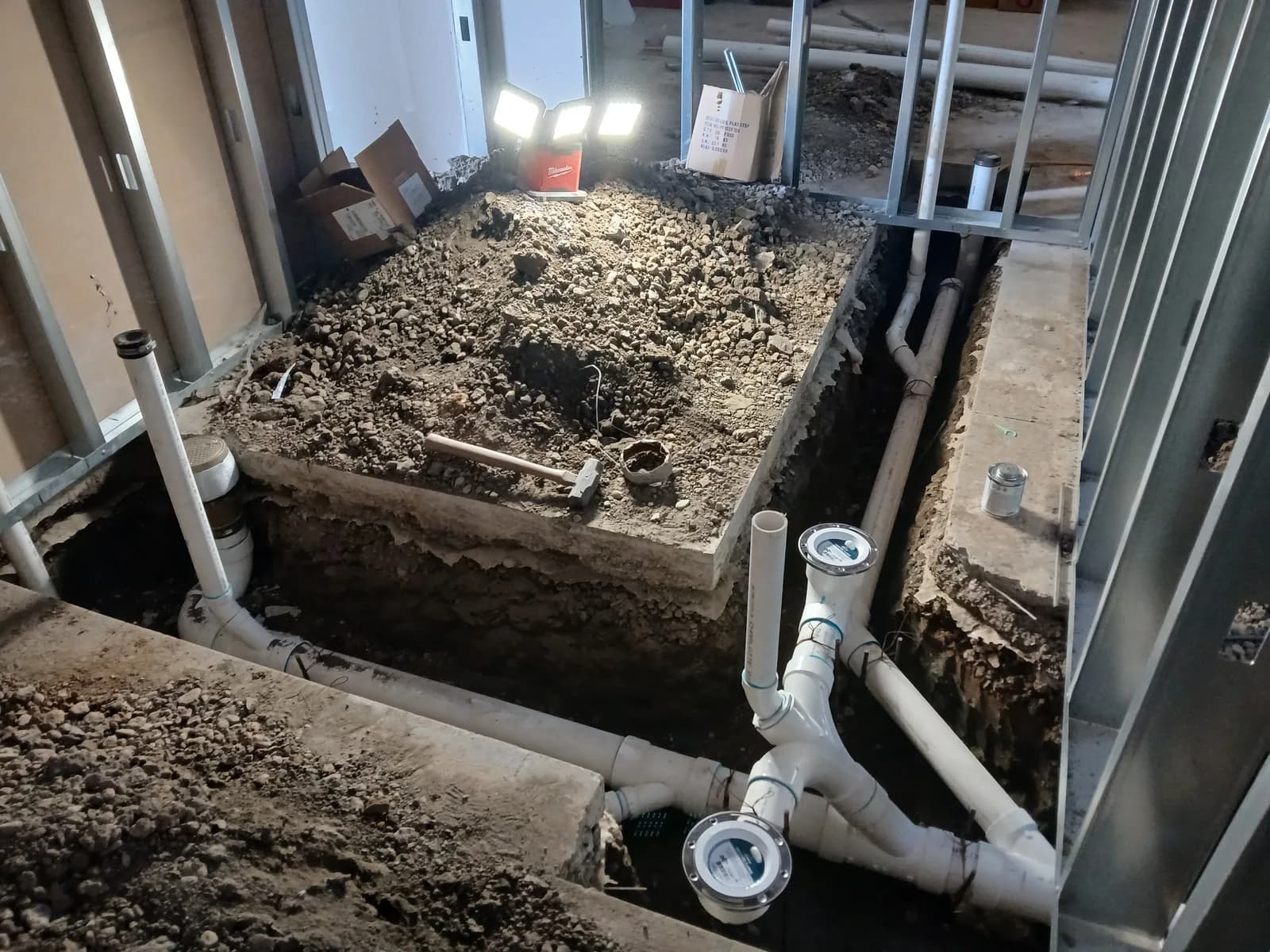
A drain that blocks in the same place every few months is not being blocked by what you are putting down it. It is blocked because something structural is catching material and holding it. There are three usual causes: a belly where the pipe has sagged and holds standing water, root intrusion at a joint, or a build-up of grease and scale narrowing the bore. Clearing it again treats the symptom and buys a few weeks. Finding out which of the three you have is what ends the cycle — and a camera inspection is the only way to tell them apart with any confidence.
The three causes, and how they behave
A belly. The pipe has lost its fall, usually from ground settlement or poor bedding, and now holds water in a low section. Solids settle in that pool instead of being carried through. Symptom: reblocks at a very consistent interval, and the line looks clear immediately after clearing.
Root intrusion. Roots enter at an open joint or crack and form a mat that catches everything passing. Symptom: worse in wet season, blockage rebuilds progressively over weeks, common on clay or cast iron laterals in older North Bay housing.
Grease and scale. Cooking fat cools and coats the pipe wall, and mineral scale builds on it. Symptom: kitchen line specifically, gradual slowing rather than sudden blockage, often smells.
Is it one fixture or the whole house?
This is the first thing to establish, and it changes the job entirely.
One fixture slow — the branch serving that fixture is the problem. A sink, a shower, a single toilet.
Several fixtures at once, or the lowest fixture in the house overflowing when you run an upstairs one, or a toilet gurgling when the washing machine drains — that is the main line, and it is a different and more urgent conversation.
Gurgling is a venting signal: water is pulling air through a trap because it cannot get it from the vent, which usually means a partial blockage downstream.
On septic, it may not be the line at all
Worth its own heading, because it applies across a lot of Sonoma and West Marin.
On a septic system, a slow or gurgling fixture is a classic early sign that the tank is full or the leach field is struggling — not that the line is blocked. Snaking the line in that situation clears nothing and buys a few weeks.
Checking tank level first tells you which problem you actually have. It is the single most useful habit for anyone on septic, and it saves paying for the wrong service call.
Snaking or jetting?
Cabling (snaking) punches a hole through the blockage and pulls some of it back. Fast, cheaper, and the right call for a single soft blockage.
Hydro jetting uses high-pressure water to scour the full diameter of the pipe, taking grease, scale and root hair off the wall rather than just opening a channel. It is what stops a line that keeps re-clogging every few months.
Jetting is not always the answer, though. On a bellied line it clears the pipe but does not fix the fall, and the pool refills. That is exactly the case where a camera pays for itself.
What the camera tells you
The condition and shape of the pipe from the inside: roots at joints, cracks and fractures, offset or separated joints, a belly holding water, scale, and the pipe material. It also locates the fault along the run.
Those findings map onto three different jobs at three different scales — spot repair, trenchless lining, or full replacement. Guessing between them is how people pay twice.
If you are in Marin, there may be a second reason to do it: several sanitary districts require a lateral inspection at sale anyway.
Related reading
Frequently asked questions
Why does my drain clog every few months exactly? That regularity is the signature of a structural cause rather than a usage one — most often a belly holding water. Something is catching material at the same rate each time.
Will chemical drain cleaner fix a recurring clog? No. It may open a soft blockage temporarily, it does nothing about roots, a belly or a cracked joint, and it sits in a fully blocked line as a hazard for whoever opens it.
Is gurgling serious? It means air is being pulled through a trap, usually because of a partial blockage or a venting problem downstream. On its own it is a warning rather than an emergency, but it rarely improves without attention.
How much of the line does a camera cover? Typically from an accessible cleanout out to the main connection, which is the section you own and the section where these faults occur.